وطن / خبر & احداث /
-
شارك
-

-

-

-

When you print a full-page document, away from an office, it's a different priority. A service tech might need to pass on an inspection report, and a delivery team might need a report that's easy to read but doesn't have to carry ink cartridges or toner.
Thermal paper A4 can be used for that workflow, provided that it is compatible with the equipment and suitable media are used. It's a combination of a page format and a printing medium—and is not a universal substitute for office paper. The choice begins with the printer and working document must be the right size, and is followed by feeding, field handling and record retention, for mobile teams and procurement buyers.
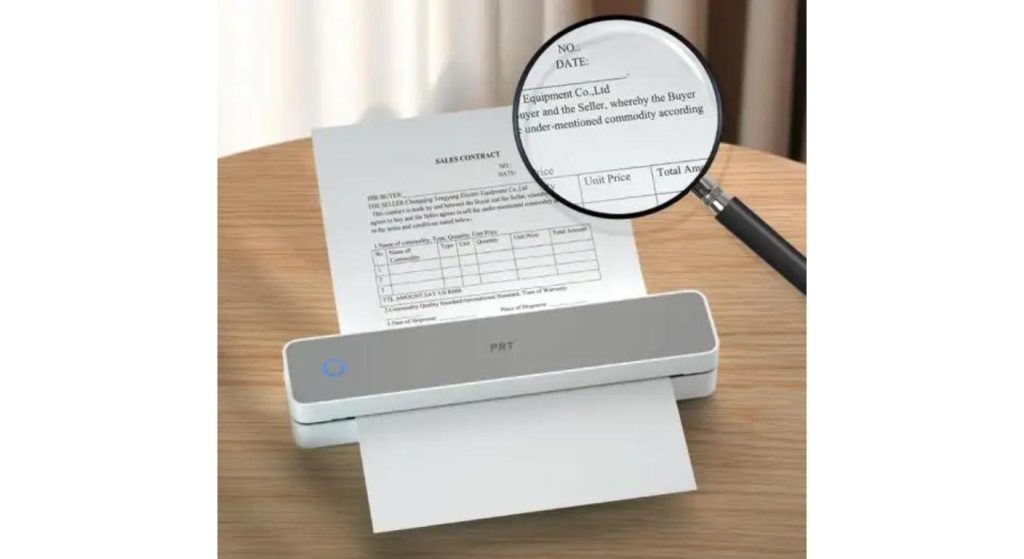
Determine the Printing System behind the A4 Claim
A4 refers to the size of a finished sheet of paper, 210 × 297 المليمتر, while direct thermal is a way of printing the image: a printhead heats the sensitive layer on the paper, meaning that there is no need for a separate ink supply or ribbon.
But, not all portable printers are direct thermal. Some employ thermal transfer, إنه, a ribbon that provides the image. Some people use an inkjet technology. Different sizes of the devices and marketing descriptions can thus mask different consumable needs.
Check the manual and approved-media information of the exact model before buying. Don't assume that because the device looks like paper or is described as “inkless” it is compatible with paper.
This application area is introduced by Jinbao's A4 thermal paper overview. Use it to start a supplier conversation, and ask for the specific grade that they are offering on the equipment and its form. A general A4 description is not compatible with all the mobile printers.
Select the Feed Format of the Worksite
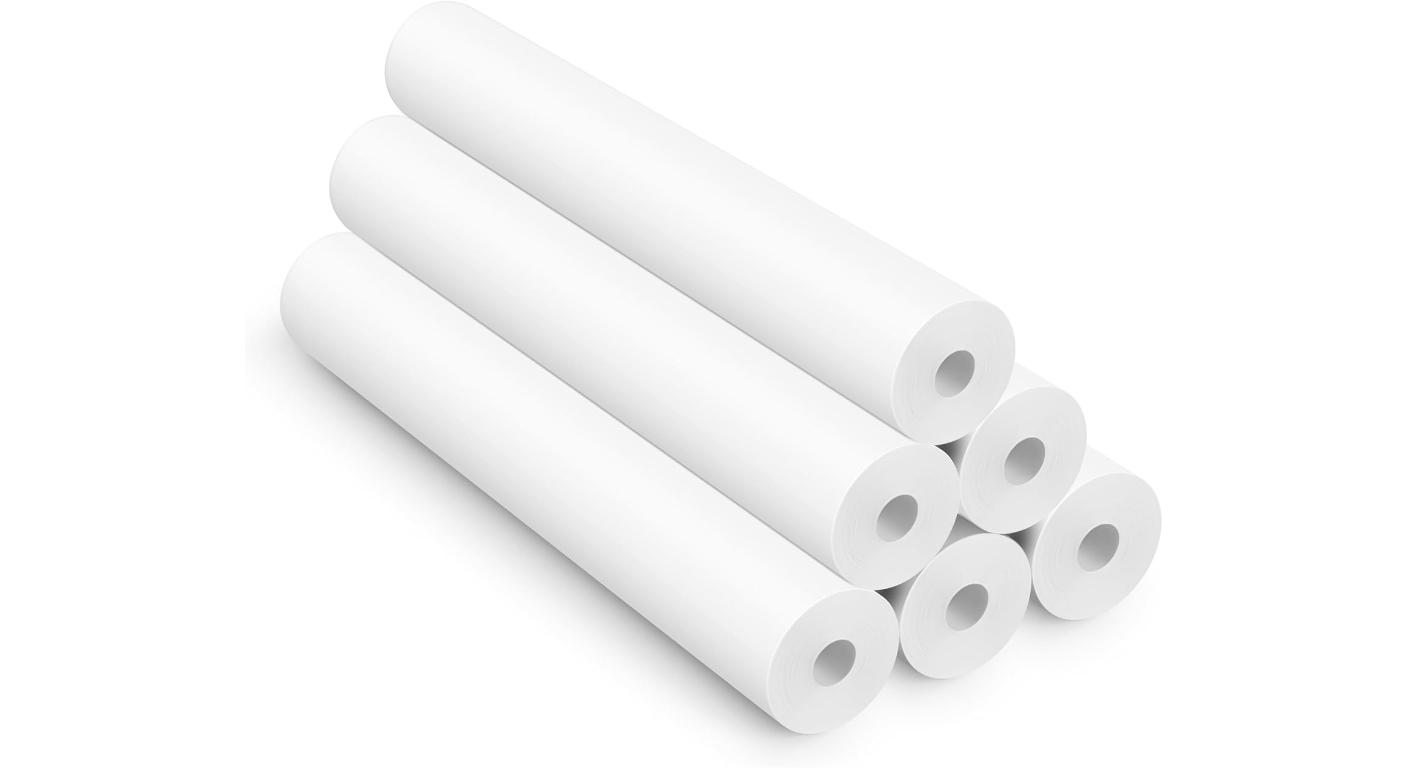
Cut sheets are available in a familiar individual page format and continuous roll helps to prevent the need for separate sheets. Availability and support will depend model by model, and may be limited to perforated or folded format for certain device types.
A4 width roll is NOT a stack of A4 paper. The length of the pages will vary based on the printing set-up and the arrangement of the cutting, tearing or perforation of the device. Agree the method of separation and delivery for each completed document.
Think about how the work will flow. There may be a requirement for a paper path and space for rolls, and bent corners and contamination are a concern with loose sheets. The new handling restrictions of a vehicle installation compared to a printer on a clean desk.
Talk about these details, through Jinbao's customization service. Include feed format, الحجم, side to print and packaging at once, not as a decision to be taken after the paper grade is approved.
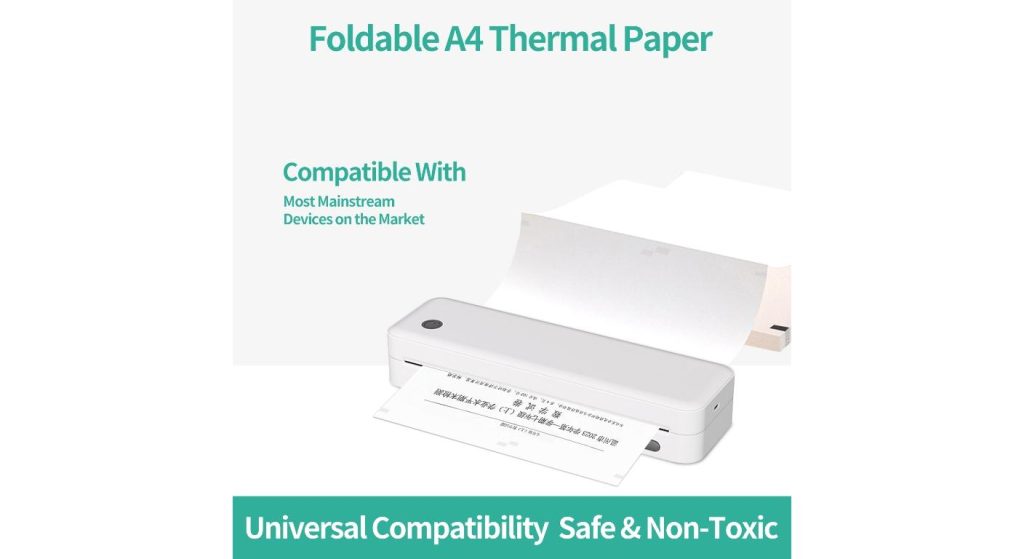
Test a Working Document, NOT a Sample Heading.
A field document can be a small instruction, checkboxes, a serial number, a signature or a diagram. Test the most challenging actual layout not just because a large heading looks dark.
Change the document and driver's page size to the desired size. Review check the lowest content, side margins and any fields that are near the printable-area limits. Maintain an appropriate size for barcodes and fine lines for the particular printer's resolution and operation.
In traditional monochrome direct thermal systems design for graphics that are simple and contrast. Heavy backgrounds and shaded portions of a photograph may necessitate a different evaluation than regular text.
Create a brief video employing the suggested media. Check loading, المحاذاة, output curl, and handling between pages. If staff is going to write on the printed form, test the intended pen and method of completing form as part of approval. If people cannot easily complete and utilize the printable document then it is of no use.

Extend Portability to Beyond the Printer
Withdrawing ink cartridges from the workflow does not take away all the field constraints. The team still requires appropriate power, a dependable connection, easily accessible document files and secured paper supplies.
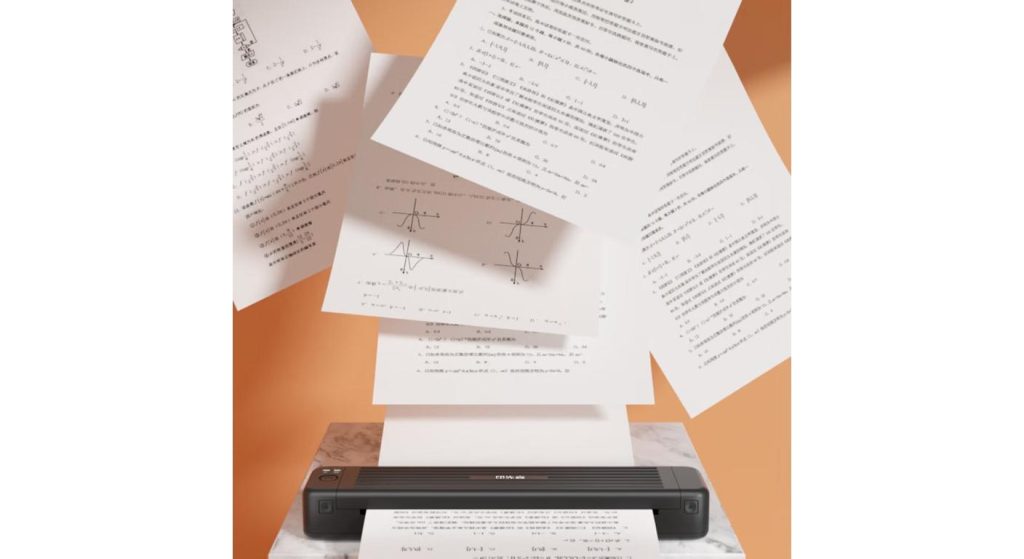
Practice the entire task where it will be performed. Test to see if staff can access the appropriate file, select the printer, insert media and print a full page without dropping pieces on non-appropriate surfaces. Put the software and equipment set-up for daily work to the test.
Store the spare media according to supplier's handling instructions, in its original packaging until required. Do not store stock in direct sun or next to heat sources. The conditions of vehicles can be vastly different from an office in the building.
Designate a specific place to discard rejected pages and to drop off finished work so the two are not mixed up. If there were a failure of the connections, or the batteries ran out, in an area where this would be a problem, state a feasible alternative method of providing the information, other than sending a second paper pack.
| Pilot Measure | What to Record | Evidence to Keep |
| Time to first usable document | File selection to completed page | Timed trial record |
| Successful first prints | Accepted pages ÷ initial print attempts | Trial sheet log |
| Manual handling interventions | Reloading, realignment, or page separation | Operator notes |
| Document completion | Writing and handover results | Completed sample form |
Determine What the Printed Record(s) Must Durably Achieve
Different requirements for a document handed over for immediate reference versus one kept over a number of years. Set its anticipated work life and storage conditions before deciding on a thermal grade.
Seek out image retention data for the proposed material, test method and conditions. Performance is subject to heat, ضوء, humidity and contact substances. A long image life should not be separated from those conditions.
If procurement policies refer to the chemistry of coatings, check Jinbao thermal paper grades (BPA free). Information on product families does not imply that all formulations or formats have the same properties.
If the paper is intended to be kept for a longer-term record assess the retention process in isolation. When the print information is at risk due to inappropriate storage, an appropriate digital copy can retain accessible information. Do not assume that the A4 format is archival permanence – follow the organization's document policy.
Order A4 Thermal Media (Separate Consumable)
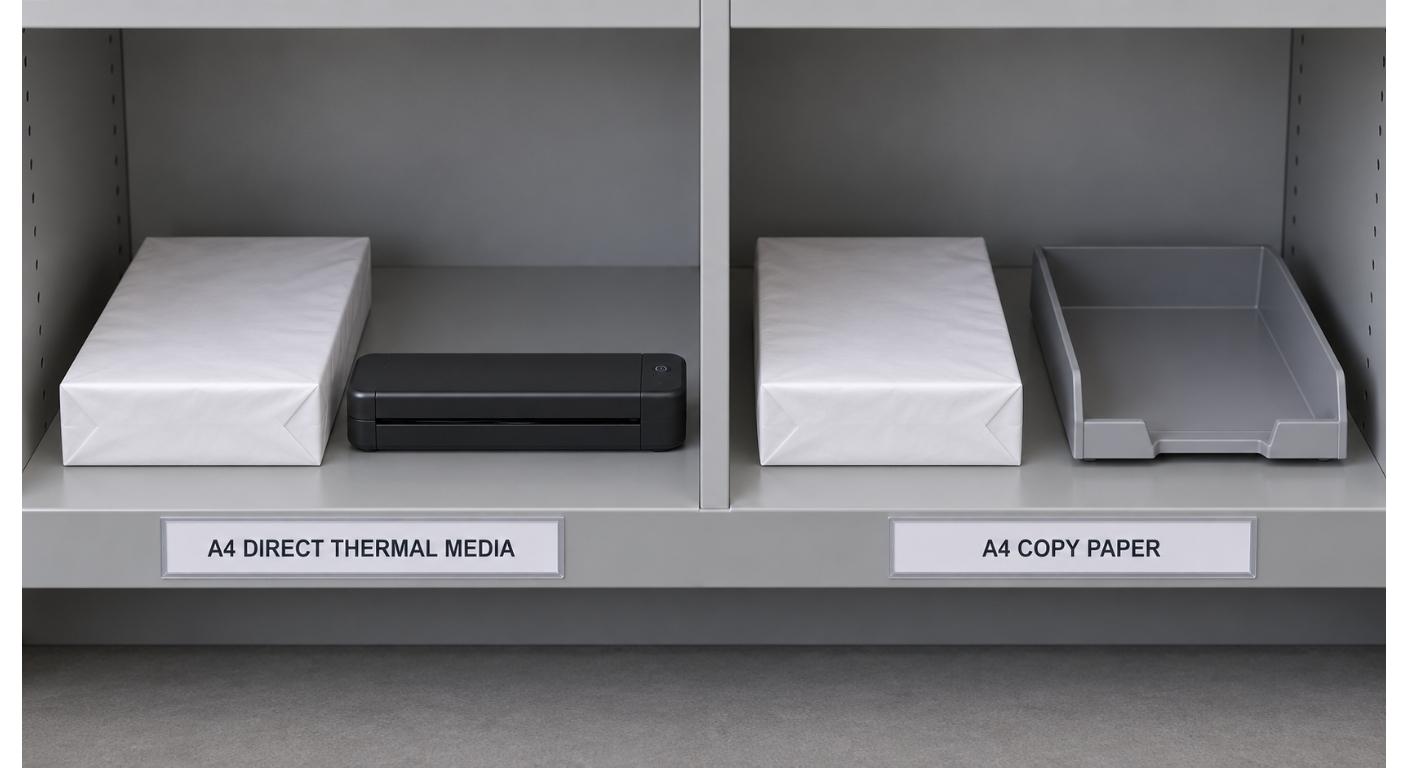
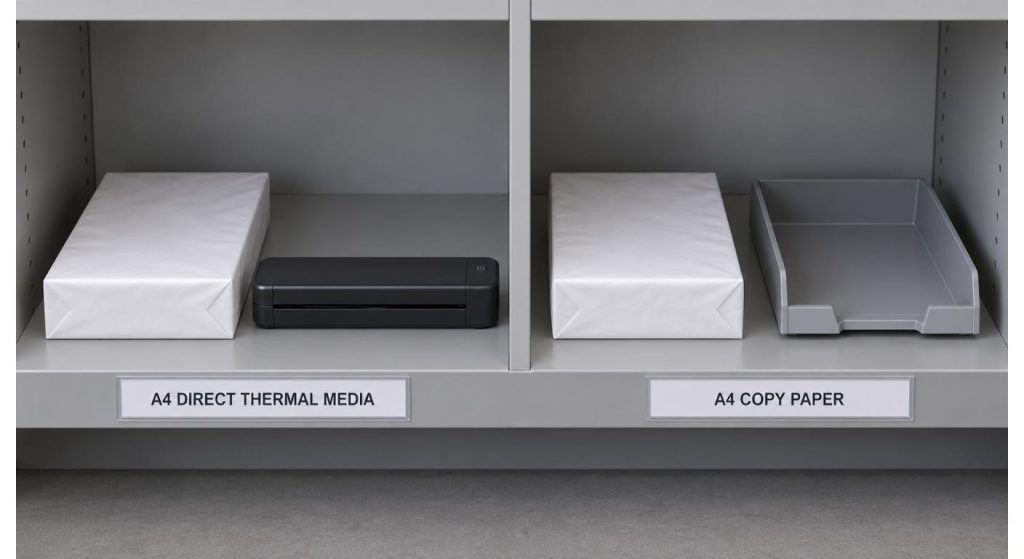
Use just thermal A4 paper specifically, and not regular A4 paper. They may appear the same, but perform different imaging tasks. The staff should be able to determine which are the approved stock without conducting informal experiments.
جينباو standard size A4 copy paper is in the category of office paper and it is not an equivalent substitute of direct thermal media. Please have item codes and clear packaging description.
Prior to ordering the product in bulk, verify printer model, supply format, ابعاد, paper qualities and necessary documentation with the supplier. Inquire about the management of subsequent substitutions and keep an authorized sample and its reference.
Compare cost per successfully completed document (damaged sheets, loading waste, reprints and any format specific accessories). The best stock will be one that can provide good field work, not necessarily the lowest pack price.
الخاتمة
Thermal paper A4 is a special printing material for compatible printing systems. Before considering field handling and retention, match the imaging technology, feed format and document design. A realistic trial will give mobile teams a better idea of which media to choose, and will not allow ordinary A4 paper to be a stand in.
الأسئلة الشائعة
س1. So is thermal paper A4 as same as regular A4 paper?
The dimensions are defined in No. A4 and the direct thermal paper consists of an imaging layer which is sensitive to heat. It can't be used with an ordinary copy paper in a direct thermal printer.
س2. Does all portable A4 printer support thermal paper?
لا, portable printers may have various technologies. Consumable requirements vary per exact model – check prior to ordering.
س3. Can all A4 size sheets be used in all A4 size rolls?
Not automatically. The printer needs to be able to use the supply format and roll-fed output requires a suitable method of page separation.
س 4. Do you need a ribbon for A4 thermal printing?
Not so for direct thermal printing. Thermal transfer printing does, don't just look for the word “thermal.”
س 5. Is it suitable to use A4 thermal print for permanent records?
لا تفترض ذلك. Review the documented image life, storage conditions and the retention needs of your organization for the grade.
سنعود إلى الداخل 24 الساعات