وطن / خبر & احداث /
-
شارك
-

-

-

-

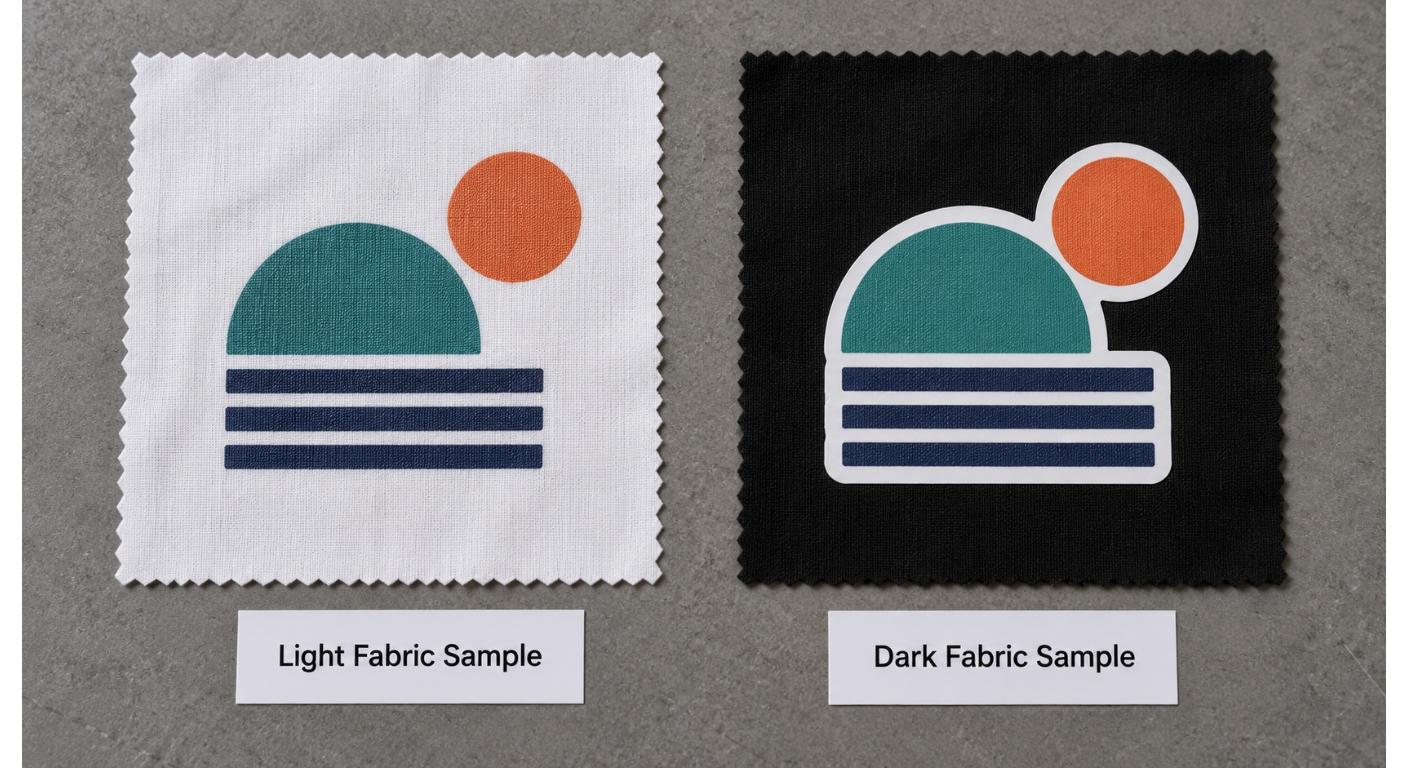
What might sound good on paper, might not sound good on a shirt. The image might become visible through the fabric, the transfer might reveal an undesirable border or the print might peel off after washing. These results are frequently the consequence of selecting the incorrect transfer system for the printer and/or garment.
A4 heat transfer paper isn't the all-round printing paper for small apparel studios, event merchandise suppliers, and customization buyers. Begin with the clothes and equipment; give permission on the whole process prior to customer orders. The objective isn't simply a coloured print out page, but a finished decoration that can be repeated.
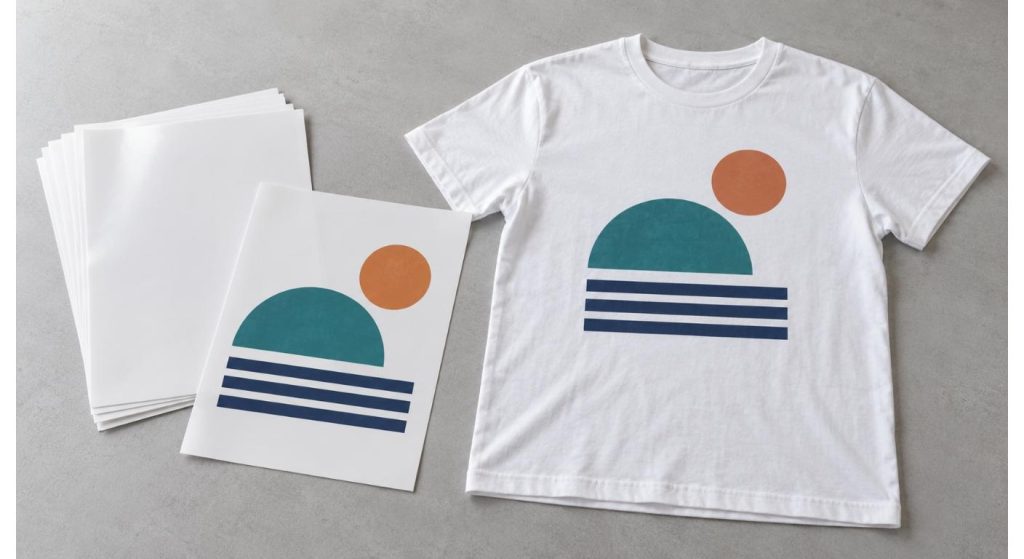
Determine the transfer process you're really seeking
A4 defines a sheet size of 210 × 297 المليمتر. It doesn't refer to the coating, compatible ink, sort of garment, or method of transfer. Products with the same names can be from different systems.
Do not consider all transfer paper as equal; inkjet garment transfer, laser transfer and dye-sublimation paper are not the same. There are two other types of materials: cut heat-transfer vinyl and film-based, which is the usual method used for DTF printing.
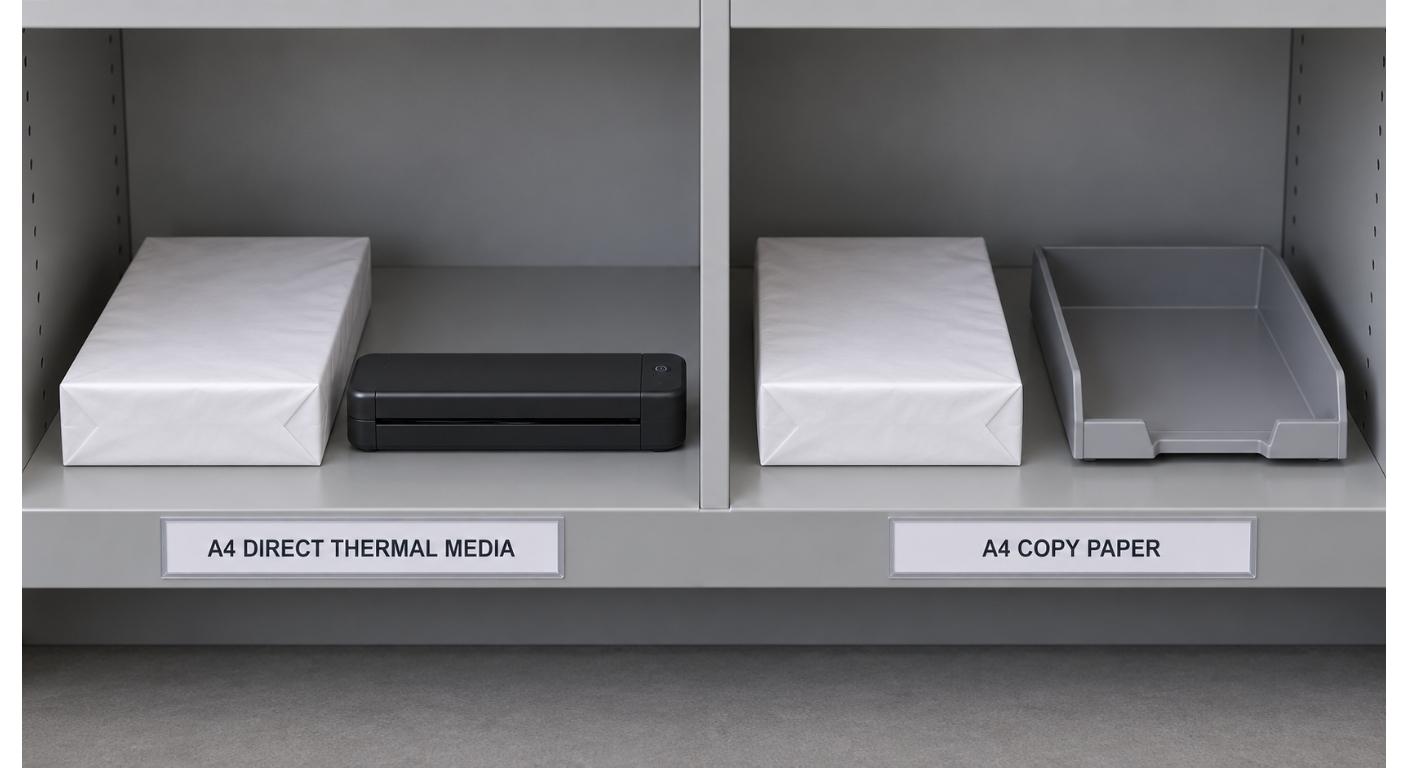
Direct thermal document paper is yet another type of paper; it has a coating that forms an image when exposed to heat from a printhead. The A4 thermal paper overview from Jinbao is for the document-printing category and is not to be considered as an indicator of compatibility for the garment-transfer category.
Document the desired process prior to asking for samples. This keeps an order talk from veering into a conversation about “thermal A4 paper” that doesn't have the capability to do the correct decoration.
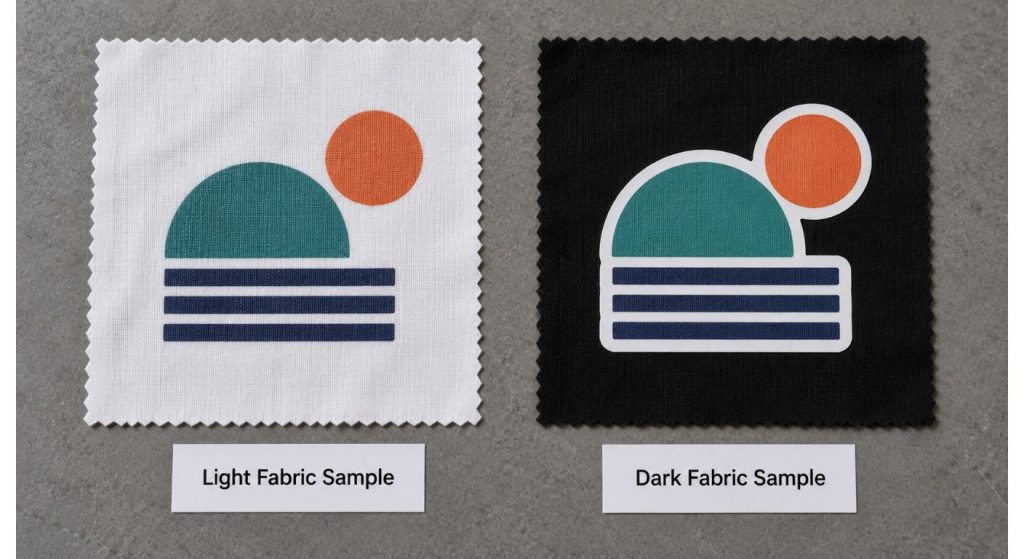
Start off with the Garment Colour and Fabric
Desccribe the fibre content, لون, texture and finish of the actual garment. Approval for a paper for one cotton shirt does not automatically mean that it is compatible with a stretch blend or coated fabric.
The background fabric can be used to create unprinted areas in transfers for light garments. Dark-garment systems will frequently have a dark layer to keep the image visible. Depending on product, that layer may also cause unprinted areas to be visible as a background.
In conventional dye sublimation processes, it is generally aimed to use suitable polyester fabrics or coated substrates. They're not a direct alternative for an opaque transfer on an untreated dark cotton shirt. Specialized treatments require their own separate process requirements and require their own validation.
Wear the clothing that will go to the market including the actual colour. Explore how colour looks, how it feels, how it stretches and how the trimmed edges show. Successful outcome on white demonstration swatch is a starting point only.
Match the Paper With the Printer and Artwork
Check the specifications of the exact printer, the ink/toner system, and the appropriate media against the transfer-paper specifications. Depending on the type of product being manufactured, inkjet or laser, the manufacturer may need to use a specific type of ink or toner.
Make sure to find out which side the image will be on and if the design needs to be mirrored. No one mirroring rule applies to all types of transfer paper. Follow instructions for product being used rather than using previous product settings.
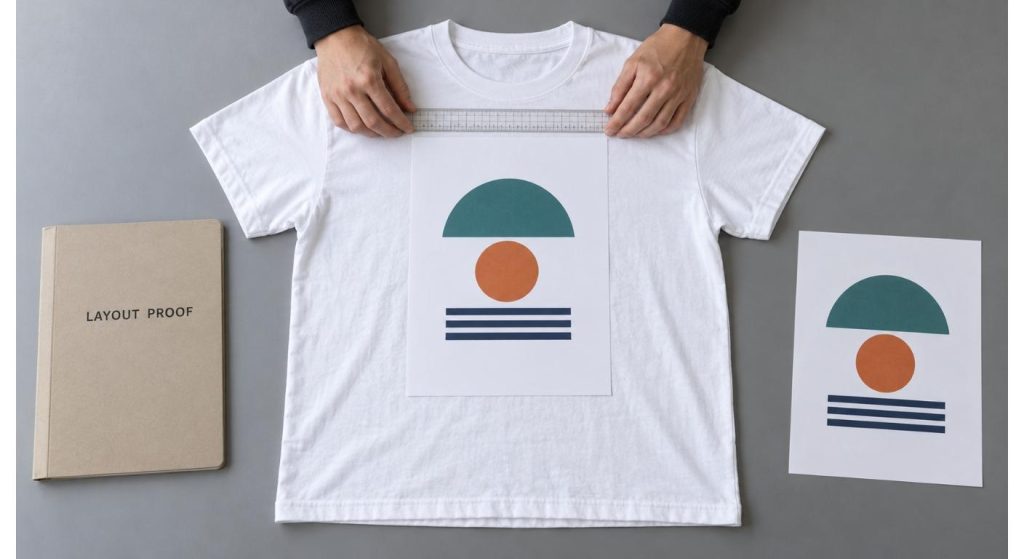
Create art in the desired end size. Allow for printer margins and trimming/cutting technique. The dimensions of A4 sheets don't necessarily equal the design space that you can use the entire space for.
Standard A4 copy paper can be used to test physical placement and artwork scale, but it can not test transfer performance. The standard A4 copy paper of Jinbao has no relationship with that layout-proof role, and can't replace the coated garment transfer stock.
Make Pressing a Documented Process.
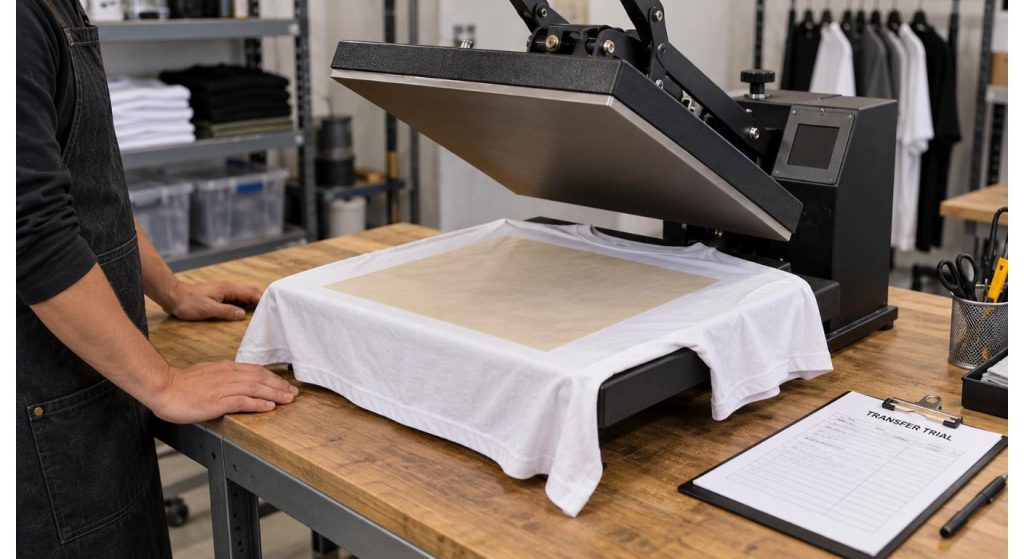
The combination of temperature, الوقت, pressure and peeling conditions all play a role. Follow the transfer manufacturer's recommended starting conditions and make sure that the garment is capable of withstanding them. There are some combinations of coatings and fabrics that can't be addressed by a generic heat-press recipe.
Inspect the pressing area, looking for seams, collars or other things which do not allow even contact. Where prepressing, protective sheets, backing removal or a second press are required in accordance with the instructions, add these steps to the approved procedure.
The press display is an indication of the heat and pressure applied and not proof that the whole of the working area is subjected to the same heat and pressure. If a defect is continually found in the same location, investigate equipment consistency.
Include peeling directions with the product reference. Hot, warm and cold peeling refer to different process conditions and removing a carrier at the wrong time can have an impact. Make one change in trials at a time, so that the improvements can be attributed to a specific change.
Sign off on Decoration After handling and Washing
Don't publish something just because it sounds great right out of the press. After the sample is brought to the condition called for by the manufacture of the transfer, check the entire decoration.
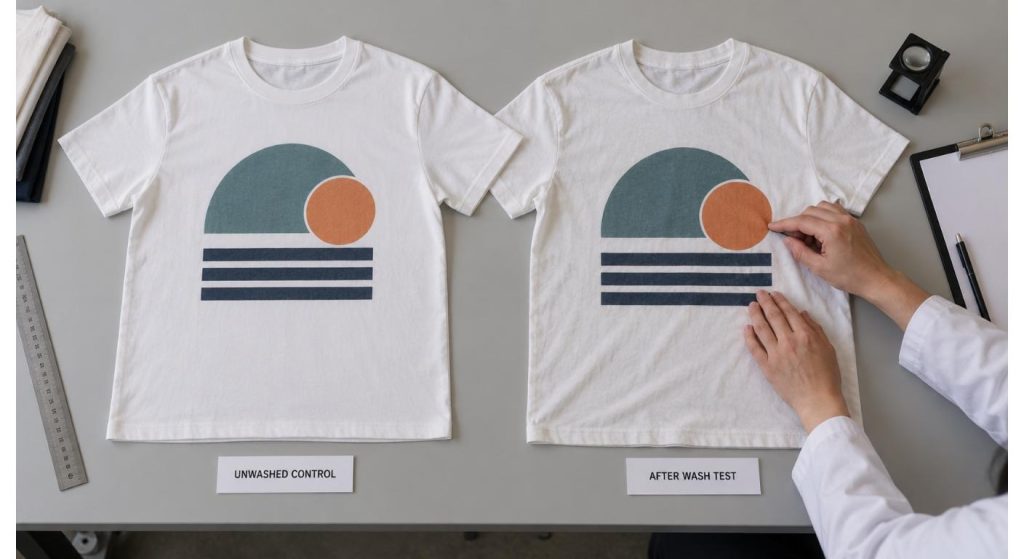
Check for lifting edges, cracking, color coverage problems, background film that isn't wanted and stiffness. Test movement to see if it is suitable to the garment, do not assume that all movement will be like that of the underlying fabric.
Wait and wash as directed and then check laundering. Write down the washing method, detergent, drying and washing cycle number. Always compare samples in the same way, and not simply based on an informal statement that a print is “washable”.
Have the user you plan to endorse look at the durability, appearance and comfort. Even a technically correct print might not be a good option if it is too large or the surface of the textile is not suitable to the use of the garment. Keep a sample and photos approved for further production comparisons.
| Trial Observation | Variable to Check First | Useful Comparison |
| Defect repeats in one press area | Contact and heat distribution | Same sample pressed in another position |
| Garment colour shows through artwork | Transfer opacity and garment compatibility | Approved light- or dark-fabric system |
| Visible border around the design | Background layer and trimming method | أصغر, closely trimmed sample |
| Print changes after laundering | Application and care procedure | Retained unwashed control sample |
Buy per Verified Specification and Yield.
A Buying Specification should relate to the validated process. Write down the product reference, A4 size, compatible printer system, garment requirements, pressing instructions and storage conditions.
If you need to request from a supplier via Jinbao's customization services, clearly specify that you need garment heat transfer media. Ask confirmation of the availability and technical information on the products that will be used before considering the thermal or copy paper already used by the company as suitable. When a customization service is broad, a verified transfer-paper offering is not developed.
Analyse the number of usable decorations per pack, taking into consideration the layout of the artwork, trimming losses, test sheets and rejected garments. When the process yields inconsistent results, a low price per sheet can get costly.
Attach the paper reference and revision of the instructions to the job record. If the garment, الحبر, paper or arrangement of the press changes, reconsider the validity of the approval. Repeat purchase is more reliable if it is the reproduction of a validated combination as opposed to simply a familiar product name.
الخاتمة
A4 heat transfer paper is used as part of a complimentary decoration system. Select the process to be performed around the garment, verify compatibility with the printer and record the pressing and peeling. Realistically handle and launder the sample and approve it to that proven specification before buying. This provides a better path to repeatable apparel for small production teams from artwork.
الأسئلة الشائعة
س1. What does A4 heat transfer paper refer to?
لا. Garment transfer media is used to transfer a decoration to the substrate and direct thermal paper develops a picture in its own coating. The use of the same words does not create interchangeability.
س2. Will inkjet transfer paper run in the laser printer?
Do not assume so. Do not use any paper other than the paper approved for the specific printer technology, and follow printer and media instructions.
س3. Does each transfer design need to be mirrored?
لا. This is dependent on the type of transfer system and application method. Please consult the product details before printing.
س 4. Is it possible to directly decorate dark cotton with sublimation paper?
Conventional sublimation is NOT the same as an opaque garment transfer. Appropriate substrates or individual treatment system validation is needed.
س 5. What temperature of heat press should I use?
Follow the transfer manufacturer's directions for each paper/garment. Test the time, pressure and peeling conditions in combination instead of test the temperature only.
سنعود إلى الداخل 24 الساعات